
Walk down almost any supermarket drink aisle and you will find more choice than any body actually needs: flavoured waters, vitamin waters, energy drinks, fruit juices marketed as a health choice, sparkling drinks dressed up in wellness branding. Somewhere at the end of the aisle, usually the least exciting shelf, sits plain water. It rarely carries a health claim on the label. It doesn’t need one.
That gap between marketing and evidence is worth sitting with, because hydration is one of the simple daily habits that support immunity, and yet it is also one of the most quietly overridden by whatever looks more interesting on a shelf.
Why Does Hydration Matter More Than Most People Realise?
Every system in the body depends on adequate fluid, not as a background detail but as a working condition. Blood volume, temperature regulation, kidney filtration, joint lubrication, and the transport of nutrients between cells all rely on it, and because protein and hydration work together, neither one alone tells the full story. Even mild dehydration, often defined as a loss of just one to two percent of body water, has been shown to affect concentration, mood, and physical performance before thirst itself is even noticeable.
This is easy to underestimate precisely because the effects are subtle rather than dramatic. Nobody collapses from being slightly under-hydrated. They simply function a little worse, all day, without knowing why — including at the level of cellular-level immune support, where the immune system relies on adequate fluid to carry its own signalling molecules between cells.
How Much Water Do You Actually Need?
The U.S. National Academies of Sciences, Engineering and Medicine put adequate total daily fluid intake at around 3.7 litres for men and 2.7 litres for women, a figure that includes fluid from food as well as drinks, according to Harvard T.H. Chan School of Public Health. The familiar “eight glasses a day” rule is a rough approximation of that, not a precise target, and needs shift with activity level, climate, and age.
What matters more than hitting an exact number is where that fluid comes from. A body that gets most of its liquid intake from sugary or artificially sweetened drinks is not meeting the same need as one drinking plain water, even if the total volume looks similar on paper.
Coffee and tea count toward that total too, contrary to the old idea that caffeine cancels out hydration. The mild diuretic effect of moderate caffeine intake does not outweigh the fluid the drink itself provides. What doesn’t count in any meaningful way is a can of soda, which behaves metabolically more like a food than a fluid source, sugar load and all.
What’s Really in the Drinks Marketed as Healthier Alternatives?
This is where the aisle gets misleading. A recent umbrella review covering 47 meta-analyses and more than 22 million people found consistent associations between regular sugar-sweetened beverage consumption and higher risk of type 2 diabetes, cardiovascular disease, kidney stones, gout, and all-cause mortality, according to a PubMed umbrella review. Fruit juices, even the ones labelled “100% natural,” deliver a similar sugar load to soft drinks once you account for the fibre that gets left behind in processing. Flavoured and “vitamin” waters often carry the same hidden sugar under softer branding.
None of this means the occasional soda or juice is a crisis. It means that using these drinks as a daily substitute for water is a much bigger metabolic decision than the packaging suggests — one that matters just as much as whether you are metabolically healthy in the first place.
Are Artificial Sweeteners Actually a Safer Swap?
Reaching for the “diet” or “zero sugar” version feels like the responsible choice, and the picture there is more complicated than it looks. Research on artificial sweeteners and the gut microbiome, including work published in Nature Medicine, has found that some non-nutritive sweeteners can shift microbial diversity and, in a meaningful subset of people, impair glucose tolerance, the very outcome they are marketed to help avoid. The effect is not universal and appears to depend heavily on the individual and the specific sweetener, which is itself the point: “sugar-free” is not the same claim as “metabolically neutral.”
Does the Type of Water Itself Matter?
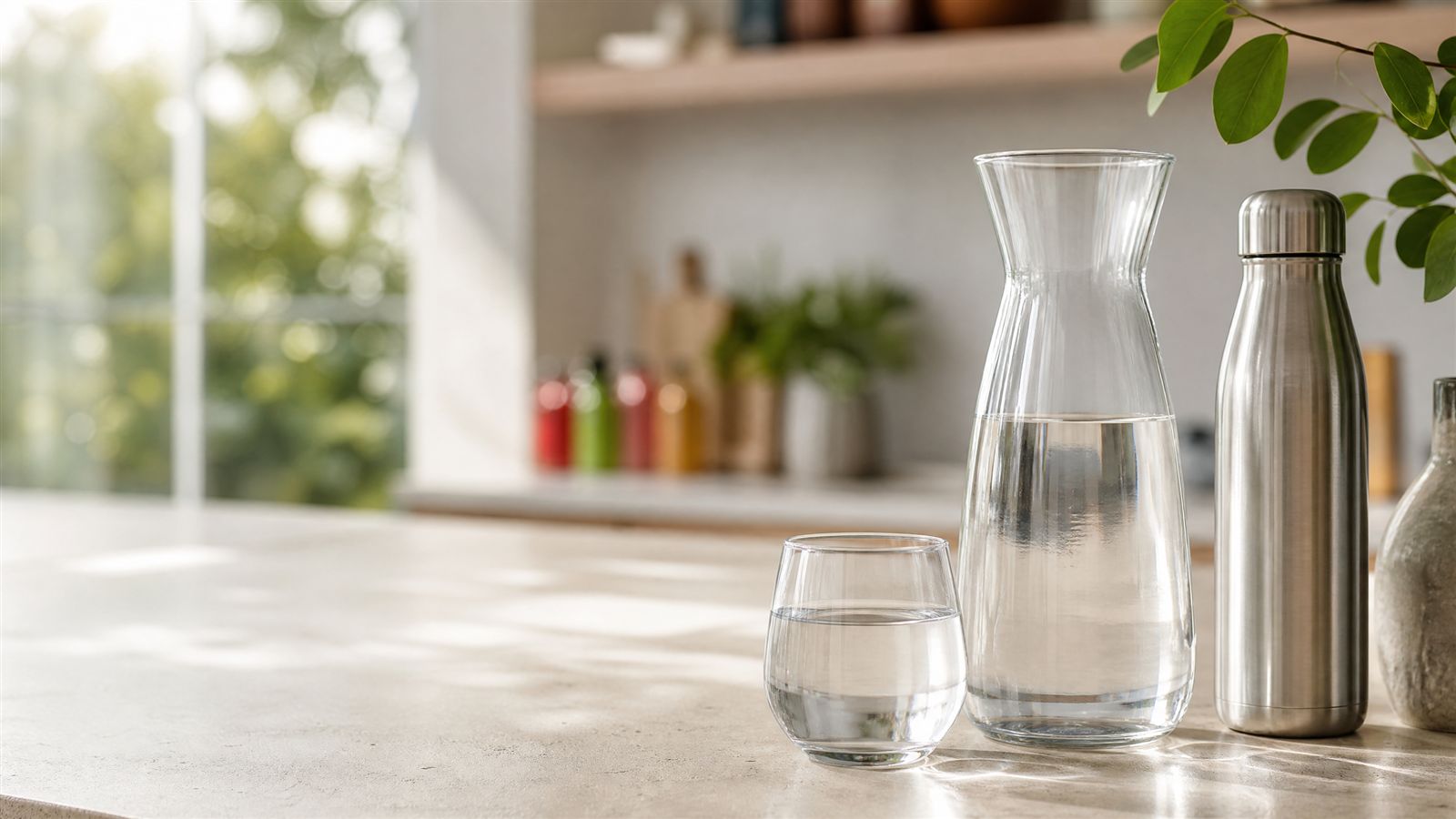
Increasingly, yes. In 2024, researchers at Columbia University used a new imaging technique to count plastic particles in bottled water for the first time at this resolution, and found an average of roughly 240,000 particles per litre, the large majority of them nanoplastics small enough to potentially cross into the bloodstream, according to NIH Research Matters. The long-term health effects are still being studied, but the finding has shifted how many practitioners think about the question: not just “am I drinking enough water,” but “what is my water actually carrying.” Filtered tap water in glass or stainless steel, where the local supply allows it, is increasingly the more thoughtful default over reaching for another plastic bottle by habit.
Plain water was never going to compete with a shelf built to catch the eye. It doesn’t need to. The evidence keeps landing in the same place: the simplest option in the aisle is still, by a wide margin, the one your body was actually built to run on. Sometimes the least exciting choice on the shelf is the one worth making anyway, and building that habit tends to be less about willpower than about making the better option the easiest one to reach for — much like giving your body’s natural detox process the conditions it needs rather than fighting against it.
With love and positivity,
Jennifer